
ABOUT
I work where people, everyday work and technology meet.
My work has taken me through healthcare technology, research, training, and hands-on technology work with organizations. They may look like different paths, but they've repeatedly brought me back to the same question: how can technology actually make the work better?
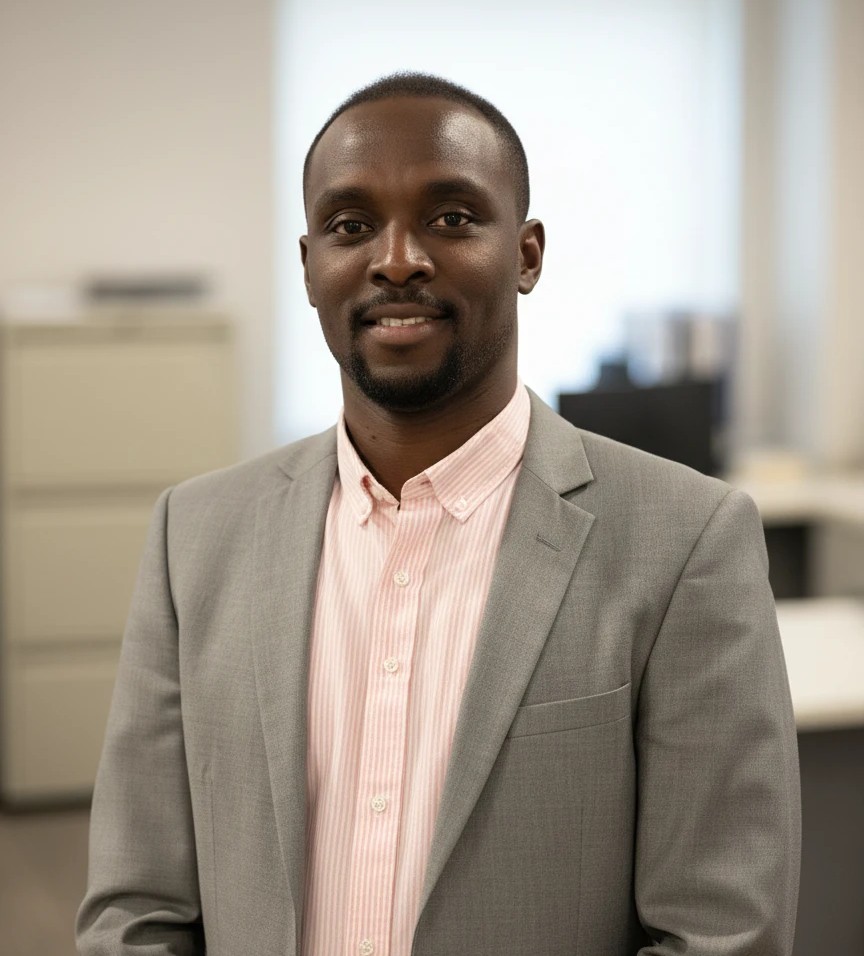
In healthcare, I work as an IT Senior Analyst, supporting systems that people depend on to do their jobs and helping staff use them effectively. That experience has made one thing especially clear: making technology available is the easy part. Making it fit the work, making it understandable, and getting people to actually use it well are different problems.
My research background shaped another part of how I approach those problems. My PhD and postdoctoral work involved complex technical systems, AI and health informatics. What stayed with me most is the discipline behind the research: understand the problem before proposing the answer, test assumptions, measure what happens, and don't claim more than the evidence supports.
Alongside that work, I've built and supported websites, Microsoft 365 environments and other digital infrastructure for organizations. Being responsible for technology in real operating environments has given me a different perspective from simply recommending tools: whatever you build eventually has to work for real people, with real constraints.
WHAT I'M FOCUSED ON NOW
Process, automation and practical AI.
I'm interested in the everyday work that quietly consumes more time and effort than it should: repeated tasks, unnecessary handoffs, disconnected systems, and processes people have learned to work around.
My focus is on understanding what's actually happening first, then finding a practical way to improve it. That might involve simplifying a process, making better use of existing tools, automating part of the work, or using AI where it genuinely adds value.
What draws me to this work
I tend to notice friction. A repeated task, an unnecessary handoff, information being copied from one place to another, or a system people have quietly learned to work around. My instinct is usually to ask why it works that way, and whether there's a simpler way.
Sometimes the answer is technology.
Sometimes it's a better process.
Sometimes the best decision is not to change anything at all.
A technical foundation
My approach is practical, but it's backed by a technical and research background spanning engineering, computing, AI and health informatics.
BSc · Computer Engineering
Al-Zaiem Al-Azhari University · 2013
MSc · Computer Application Technology
Shandong University of Science and Technology · 2017
PhD · Information & Communication Engineering
Hohai University · 2021
Postdoctoral research
AI and health informatics · University of Saskatchewan and University of Manitoba
View publications on Google Scholar
Something at work feels harder than it should?
I'm always interested in hearing how organizations actually get work done and where things get unnecessarily difficult.
Start a conversation →